 Happy Life Games
Word Connect Tips: How to Find Every Word in the Letter Wheel
Word Connect combines two small pleasures: the anagram hunt of rearranging a handful of letters, and the click of a crossword filling in. You get a wheel of letters and a little crossword above it. Every word you spell from the wheel that belongs in the crossword drops into place, and the letters it shares with other words give you clues for the rest.
Our version starts with three letters and a couple of words, then grows to six and seven letter wheels with special pieces like locked words and bombs. Here is how it works and how to find those last stubborn words.
How to play
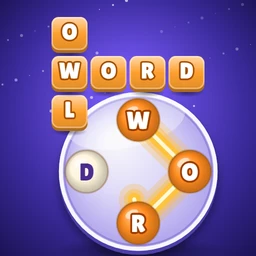
- Put your finger on a letter in the wheel and drag through other letters to spell a word. Each letter can be used once per word.
- Release to submit. The word you are building is shown above the wheel as you go.
- Changed your mind halfway through? Slide back to the previous letter to remove the last one.
- If the word belongs in the crossword, it fills its row or column. Find every crossword word to finish the level.
Words are at least three letters long, and the longest word in each puzzle always uses every letter in the wheel. If you spell a real word that is not part of the crossword, it goes into the bonus jar instead. The jar keeps a running count of all the bonus words you have found, so extra words are never wasted effort. Spelling a word you have already found just shows "Already found."
Two buttons help when you are stuck. The shuffle button rearranges the letters around the wheel, which is surprisingly effective at breaking a mental block. The hint button reveals one letter of a word in the crossword. If hints reveal every letter of a word, that word completes on its own.
Beginner strategy
Start short
Three-letter words are the quickest to find and they fill letters that help with everything else. With the letters R, A, T, E, for example, you can start with RAT, ART, TAR, EAT, TEA and ATE before working up to RATE and TEAR.
Use the crossword as a clue sheet
The empty boxes tell you how long each missing word is. Revealed letters at crossings tell you exactly where certain letters go. If you know a four-letter word starts with T and has A in third place, you only need to try a few combinations.
Look for common endings and beginnings
Letter groups like -ED, -ER, -ING, RE- and UN- turn up a lot. If the wheel has an E and a D, check which smaller words can take -ED. If it has an S, many words also have a plural form, but check the box lengths before you spend time on them.
Shuffle often
Your brain gets used to the letters in one arrangement and stops seeing new combinations. A quick shuffle puts different letters side by side, and words you missed often jump out right away.
Advanced techniques
Find the long word early
The longest word uses every letter, and it usually crosses several other words. Finding it fills a lot of letters at once and gives you footholds everywhere else. Try placing uncommon letters first: if the wheel has a V or a K, think about where those letters naturally sit in a word.
Work through letter pairs
When you are stuck on a word of a known length, pick one letter as the start and go through each of the others as the second letter. Most pairs will be dead ends, but this method finds words that random guessing misses. Combine it with the known crossing letters to cut the options down quickly.
Think in families
Once you find a word, check its relatives. If STARE is in the wheel, so might be STAR, TEAR, RATE, RATES or ASTER. Anagram families like TEA, EAT and ATE often appear in the same puzzle.
Special pieces in later levels
- Gems (level 3). Some crossword boxes hold a gem. Fill the box with a word and you collect the gem. The counter at the top shows how many you have collected out of the total.
- Locked words (level 5). A padlock on a word means it cannot be filled yet, even if you spell it correctly. Its key is a word that crosses it, marked with a small key icon. Spell the key word first and the lock opens. Trying a locked word before that shows "Locked! Find the key word."
- Bombs (level 8). One word carries a bomb with a counter. Every swipe that does not fill a new crossword word, including mistakes, bonus words and repeated words, takes one off the counter. If it reaches zero, the level is lost. Solve the bomb word early, and if it is locked, open its key first.
- Key chains (level 12). Sometimes the key word is locked too. Follow the chain back to the one word that is free and work forward from there.
- Fog (level 15). Fog covers some of a word's boxes, so you cannot see exactly how long it is. Use the crossing letters around it and try a few lengths.
Common mistakes
- Guessing wildly on bomb levels. With a bomb on the board, random attempts burn down the counter. Think first, then swipe.
- Chasing bonus words. They are fun, but they do not fill the crossword. When a bomb is ticking, they cost you a swipe.
- Ignoring the box lengths. A five-letter word cannot fill a four-box slot. Check the shape before you search.
- Forgetting locks. Spelling a locked word does nothing until its key is found, so look for the key icon before you start on a padlocked word.
What changes in later levels
The first three levels use three-letter wheels, levels 4 to 10 use four letters, and five-letter wheels take over until around level 25. After that the wheel grows to six letters, and past level 80 some puzzles have seven. Crosswords also get bigger, with up to seven words. Every tenth level from level 20 is a big one with an extra letter and a full set of challenges: two locks, a bomb, fog and gems all at once. The level right after is a calmer one.
FAQ
Why didn't my word count?
Either it is not in the crossword (it may have gone to the bonus jar instead), it is locked, or it is not in the game's word list. The word list sticks to common, family-friendly English words.
Do I need to collect all the gems to win?
No. The level ends when every crossword word is filled. Gems are collected along the way by filling the boxes they sit in.
What does the hint reveal?
One letter of a missing word. When a bomb is on the board, the hint points you to the bomb word (or the key that opens it) first, then to locked words.
Does shuffle change the puzzle?
No. It only rearranges where the letters sit in the wheel. The letters and the words stay the same.